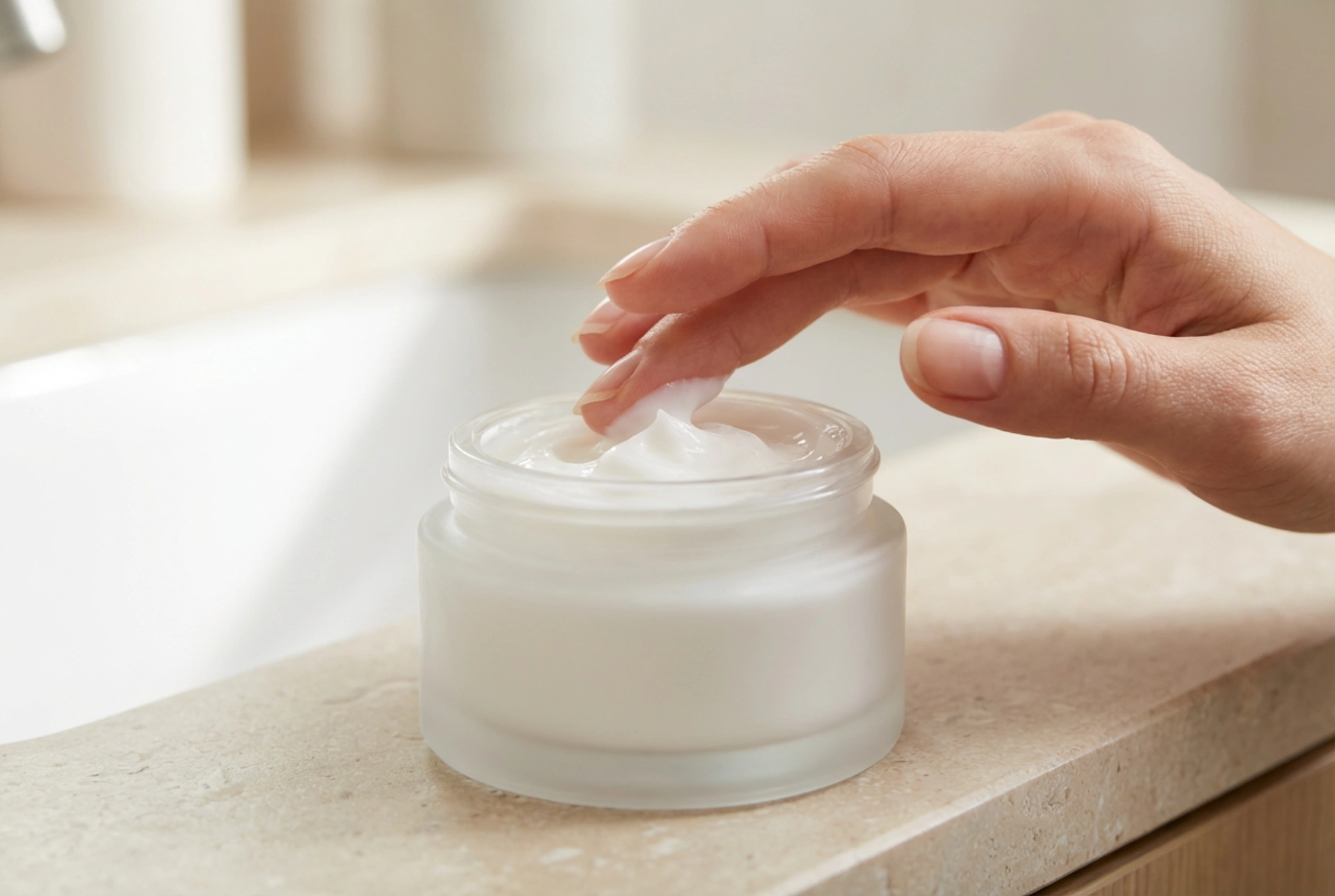


A daily moisturiser is the cornerstone of any effective skincare routine, providing essential hydration that helps maintain the skin's balance and resilience. Regardless of your skin type, using a well-chosen cream every day is key to achieving a comfortable, smooth, and healthy-looking complexion. But with so many options available, how do you find the one that's right for you? It starts with understanding your skin's unique needs and learning to read the ingredient list.
Understanding Your Skin's Needs First
The "best" moisturiser isn't a one-size-fits-all product. It's one that complements your specific skin type. Before looking at products, take a moment to assess your skin. Does it tend to feel tight and flaky, or does it become shiny a few hours after cleansing? Understanding these basic characteristics is the first step toward making an informed choice.
- For Drier Skin: If your skin often feels tight, looks dull, or is prone to flakiness, it lacks both water and lipids. Look for richer, thicker formulas labelled as "creams". These provide more substantial nourishment and create a protective barrier to lock in moisture.
- For Oilier or Combination Skin: This skin type produces excess sebum, which can lead to shine, particularly in the T-zone. The goal is to provide hydration without adding extra grease. Lightweight formulas like "lotions" or "gels" are ideal. They absorb quickly and provide water-based hydration without a heavy feel.
- For Normal Skin: If your skin is generally balanced—not too oily, not too dry—your goal is maintenance. You have the flexibility to choose from lotions or creams depending on the season or your personal preference. A classic cream with a balanced formula works well.
- For Sensitive Skin: If your skin is easily irritated or reacts to new products, simplicity is key. Opt for moisturisers with short ingredient lists, and always avoid common irritants like added fragrances and certain types of alcohol. Soothing ingredients are a major plus.
Decoding the Ingredient List: What to Look For
The label on a moisturiser contains a wealth of information. Understanding the function of key ingredients will empower you to choose a product based on its formula, not just its marketing. Good moisturisers typically contain a blend of the following types of ingredients.
Humectants: The Water Magnets
Humectants are ingredients that attract water molecules from the air and the deeper layers of your skin, drawing them to the skin's surface. This helps to keep the skin hydrated and plump. They are essential in any moisturising formula.
- Glycerin: A classic, effective, and widely used humectant that is gentle on the skin.
- Hyaluronic Acid: Famous for its ability to hold many times its weight in water, it provides intense hydration and can help give the skin a fuller appearance.
- Aloe Vera: Known for both its hydrating and soothing properties.
Emollients: The Surface Smoothers
Emollients work by filling in the gaps between skin cells, which helps to soften and smooth the skin's surface. They improve the skin's texture and flexibility, making it feel less rough or tight.
- Ceramides: These are lipids that are naturally part of the skin barrier. Adding them in a moisturiser helps to reinforce this barrier, preventing moisture loss and protecting from external factors.
- Squalane: A lightweight, non-greasy oil that is very similar to the skin's own natural oils, making it easily absorbed and highly effective.
- Plant Butters and Oils: Ingredients like shea butter or jojoba oil are excellent emollients, particularly beneficial for drier skin types due to their rich, nourishing properties.
Occlusives: The Protective Seals
Occlusives form a physical barrier on the skin's surface, preventing water from evaporating. While they don't add hydration themselves, they are crucial for sealing in the moisture provided by humectants. They are often what gives richer creams their thick texture. Common examples include certain silicones like dimethicone or natural waxes. They are especially useful for very dry skin or for nighttime routines.
The Art of Application: Getting the Most From Your Moisturiser
How you apply your moisturiser is just as important as the product you choose. Following a few simple steps can significantly enhance its effectiveness.
Step 1: Start with a Clean Face. Always apply moisturiser to freshly cleansed skin. This ensures there is no barrier of dirt or oil preventing the product from being absorbed properly.
Step 2: Apply to Damp Skin. This is a game-changing tip. After cleansing, gently pat your face with a towel but leave it slightly damp. Applying your moisturiser to damp skin helps to trap that surface water, locking in an extra layer of hydration.
Step 3: Use the Right Amount. More is not always better. A pea-sized to almond-sized amount is generally sufficient for the entire face and neck. Using too much can feel heavy and may not absorb fully.
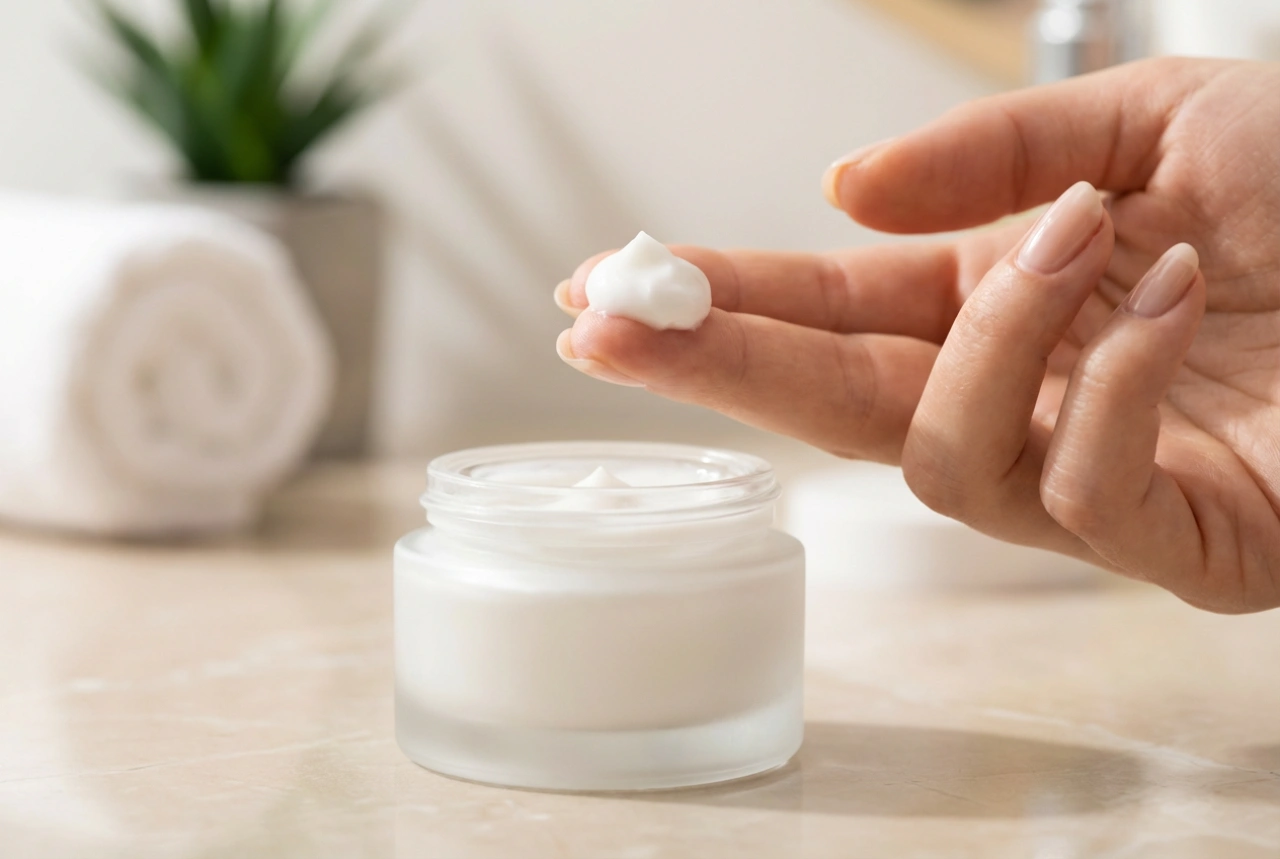
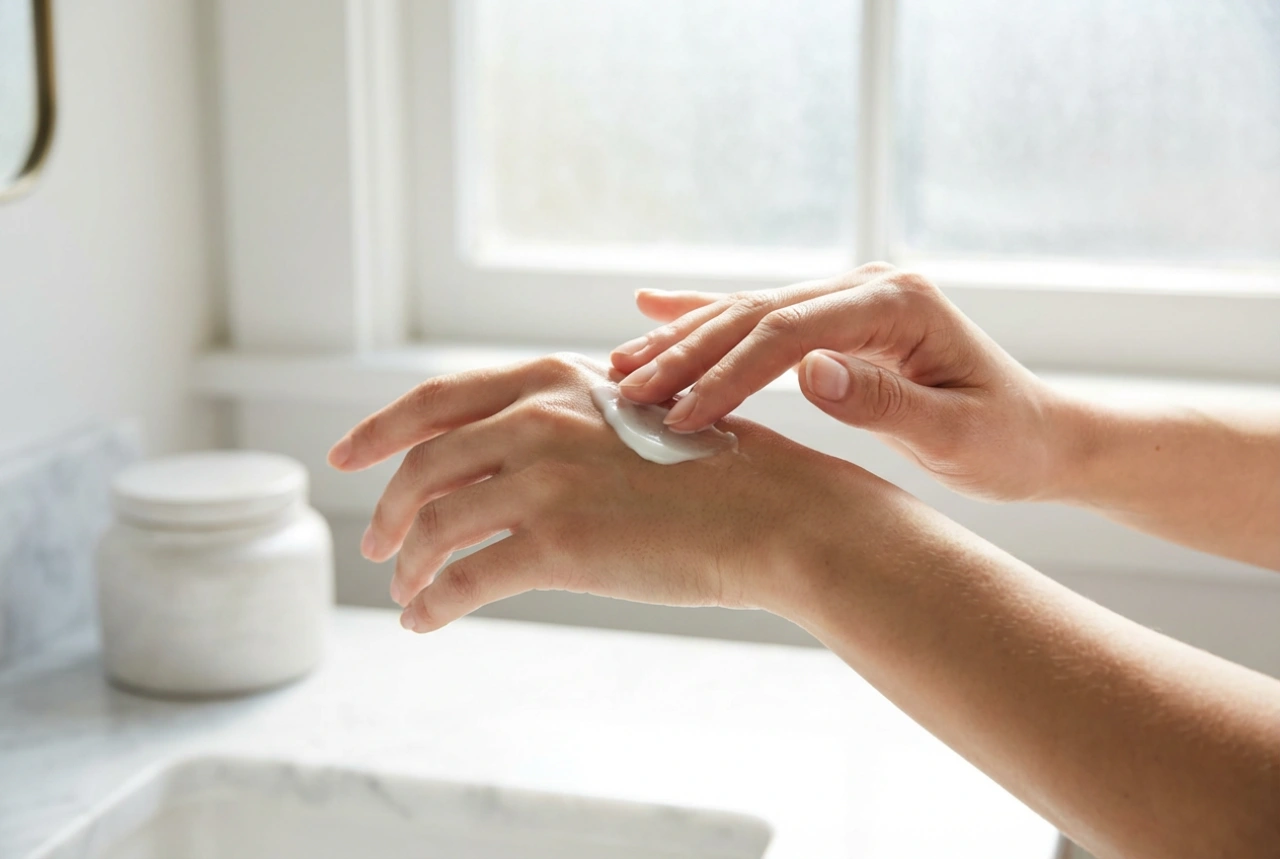
Step 4: Be Gentle. Dispense the cream onto your fingertips and gently massage it into the skin using light, upward strokes. This motion helps to stimulate circulation without pulling or tugging at the skin. Don't forget to extend the application down to your neck and chest (décolletage), as these areas also benefit from hydration.
Step 5: Timing is Everything. In your morning routine, your moisturiser should be applied after any serums and before your sunscreen. At night, it should be the final step to seal in all your other skincare products and support the skin's natural repair processes while you sleep.
Common Moisturising Mistakes to Avoid
To ensure your daily moisturising habit is beneficial, be mindful of a few common pitfalls:
- Ignoring Your Skin Type: Using a heavy cream on oily skin or a light gel on dry skin won't deliver the right balance of hydration and can lead to discomfort or shine.
- Applying to Bone-Dry Skin: This misses the opportunity to lock in extra moisture and can make the product harder to spread.
- Forgetting Your Neck: The skin on the neck is thin and one of the first areas to show signs of ageing, so it needs daily hydration just as much as your face.
- Inconsistent Use: For best results, moisturising needs to be a consistent, twice-daily habit. Sporadic application won't maintain the skin's hydration levels effectively.
By thoughtfully selecting a moisturiser based on its ingredients and your skin's needs, and by mastering a simple but effective application technique, you can transform this daily step into a powerful ritual for maintaining healthy, comfortable, and radiant skin.