

Achieving a healthy, radiant complexion often starts with one fundamental principle: hydration. Well-hydrated skin not only looks plump and smooth but also functions more effectively. Among the most celebrated ingredients for boosting skin moisture is hyaluronic acid, a staple in many modern moisturisers. But to truly unlock its potential, it’s essential to understand not just what it is, but how to apply it correctly and integrate it into your existing skincare routine.
What is Hyaluronic Acid and How Does It Work in a Moisturiser?
Hyaluronic acid (HA) is a substance naturally found in our skin, where it plays a crucial role in maintaining moisture levels. In skincare, it's known as a powerful humectant. Think of it as a tiny sponge that can attract and hold onto a significant amount of water. When included in a moisturising cream, its primary job is to draw water into the top layers of the skin, leading to a visibly plumper, smoother, and more hydrated appearance.
Skincare formulations often use different molecular weights of hyaluronic acid. Larger molecules sit on the skin's surface, providing immediate surface hydration and a silky feel. Smaller molecules can penetrate a little deeper, helping to deliver moisture within the skin's upper layers. A well-formulated cream often contains a blend of these sizes to provide multi-level hydration. The cream itself also contains other ingredients, like emollients and occlusives, which help to smooth the skin's texture and lock that hydration in, preventing it from evaporating.
The Correct Way to Apply Your Hyaluronic Acid Moisturiser
The effectiveness of a hyaluronic acid moisturiser can be significantly enhanced by one simple trick: applying it to damp skin. Because HA works by binding to water, giving it that initial moisture to grab onto is key. Applying it to a completely dry face can, in very arid conditions, cause it to pull moisture from the deeper layers of your skin, which is the opposite of what you want.
Follow these steps for optimal application:
- Start with a clean base: Always apply your moisturiser after cleansing your face.
- Leave skin slightly damp: After cleansing, gently pat your skin with a soft towel, but don't rub it completely dry. Leave it feeling slightly damp or dewy. Alternatively, you can spritz your face with a gentle, alcohol-free facial mist.
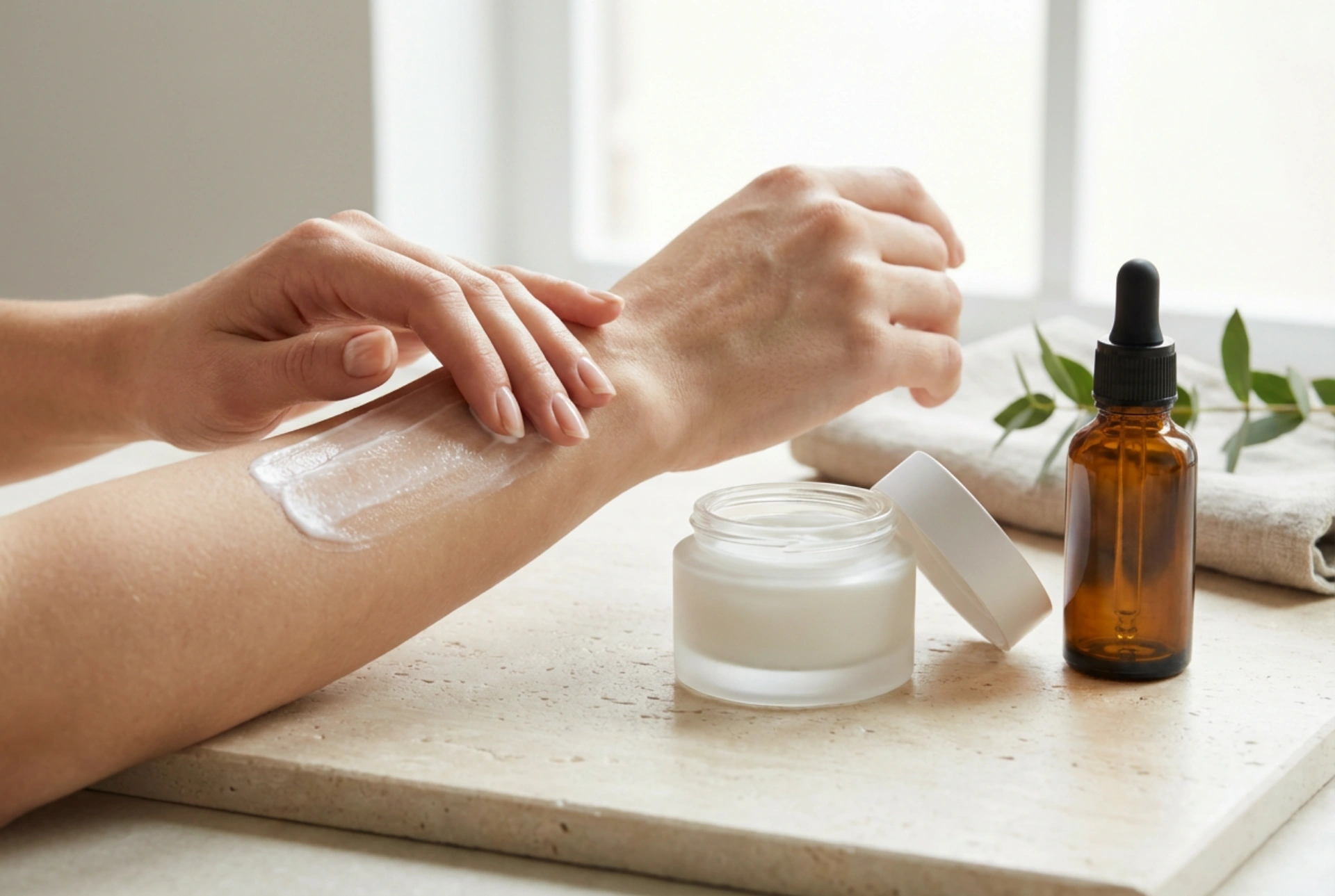
- Use the right amount: You only need a small amount of product, typically about the size of a pea or a small coin, for your entire face and neck.
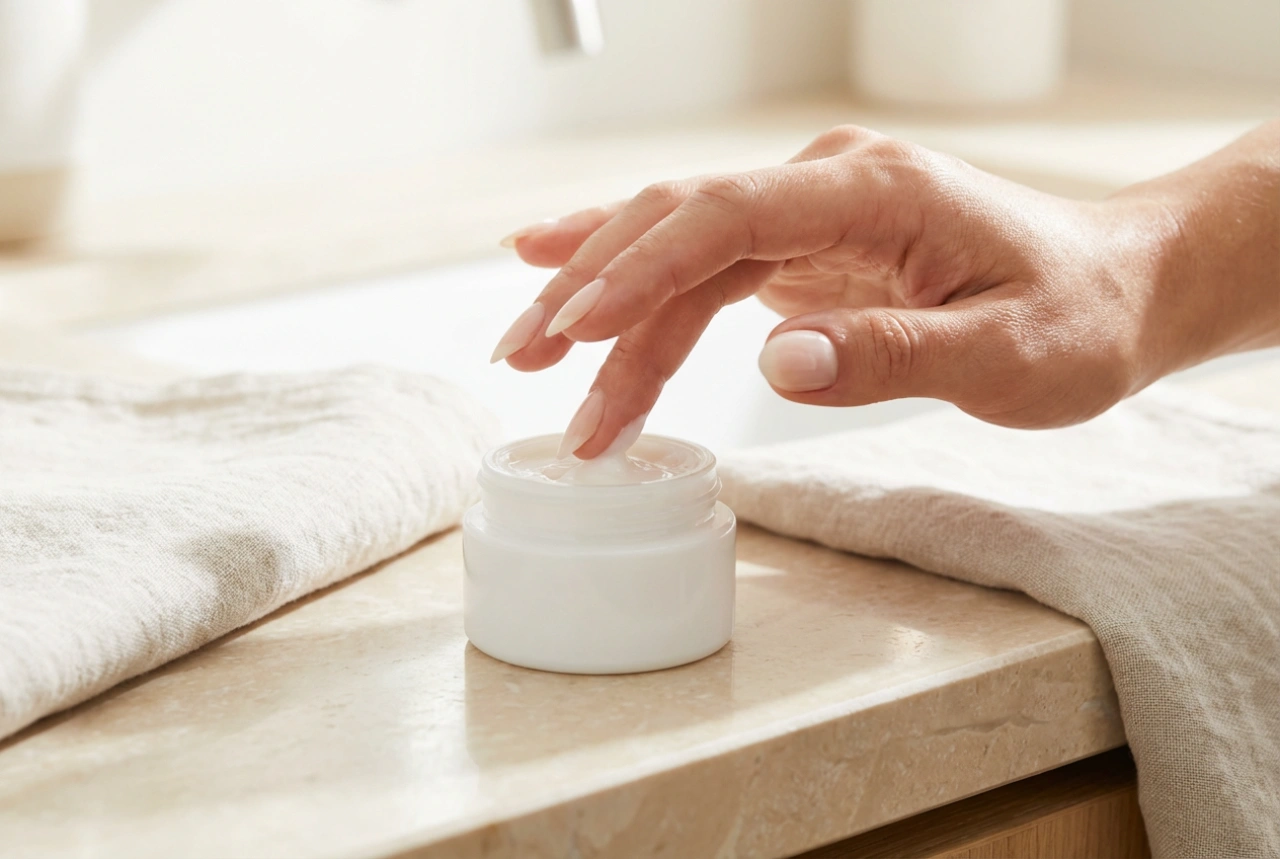
- Warm and press: Warm the cream between your fingertips for a few seconds. This helps it spread more easily. Instead of rubbing vigorously, gently press or pat the moisturiser into your skin. Use light, upward strokes to massage any remaining product in. This method is gentler on the skin and aids absorption.
- Don't forget the neck and décolletage: These areas are just as important as your face and can also benefit from the hydrating effects of your moisturiser.
Layering Skincare: Where Does Your Moisturiser Fit In?
Modern skincare routines often involve multiple products, and the order in which you apply them matters. Layering correctly ensures that each product can perform its function without being blocked by another. The general rule of thumb is to apply products from the thinnest consistency to the thickest.
A typical hydration-focused routine would look like this:
- Cleanser: To wash away impurities and prepare the skin.
- Toner or Facial Mist (Optional): To add a first layer of hydration and dampen the skin.
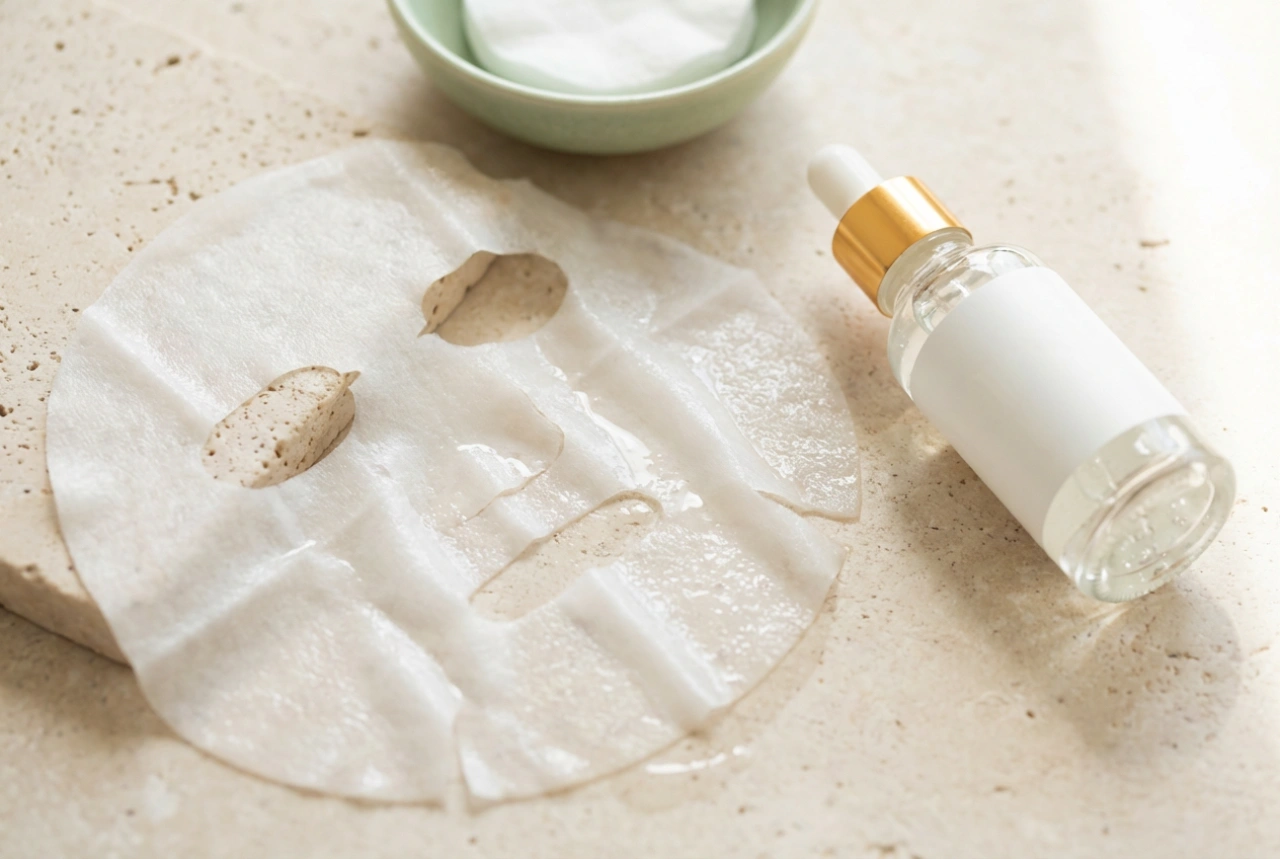
- Serum: This is where you would apply a lightweight, concentrated product, such as a standalone hyaluronic acid serum from a dropper bottle. Serums are designed to deliver a potent dose of active ingredients.
- Moisturiser: Applied after your serum, the hyaluronic acid moisturiser does two things. It provides its own hydrating and conditioning benefits, and crucially, it 'seals' in the serum and the moisture from the previous steps. The cream's richer texture forms a barrier that helps prevent water loss throughout the day or night.
- Sunscreen (Daytime): Always the final step in your morning routine to protect your skin from UV rays.
Allow each layer to absorb for a minute or so before applying the next. This prevents products from pilling (balling up on the skin) and ensures each one has time to get to work.
Common Mistakes to Avoid for Maximum Hydration
Even with a great product, a few common slip-ups can hinder your results. Being mindful of these can make a big difference in your skin's hydration levels.
- Applying to bone-dry skin: As mentioned, this is the most common mistake. Always ensure your skin has some dampness for the hyaluronic acid to bind with.
- Using too much product: More is not better. An excessive amount of cream won't absorb properly, can feel heavy or sticky, and may lead to pilling when you apply other products or makeup.
- Ignoring your environment: In a very dry climate (or a room with strong air conditioning or heating), relying solely on a simple HA serum might not be enough. This is why a moisturiser containing HA is so effective, as the cream's other ingredients provide that essential occlusive layer to lock everything in.
- Inconsistent use: For lasting hydration, consistency is key. Make moisturising a non-negotiable step in your morning and evening skincare rituals to maintain a strong and healthy skin moisture barrier.